
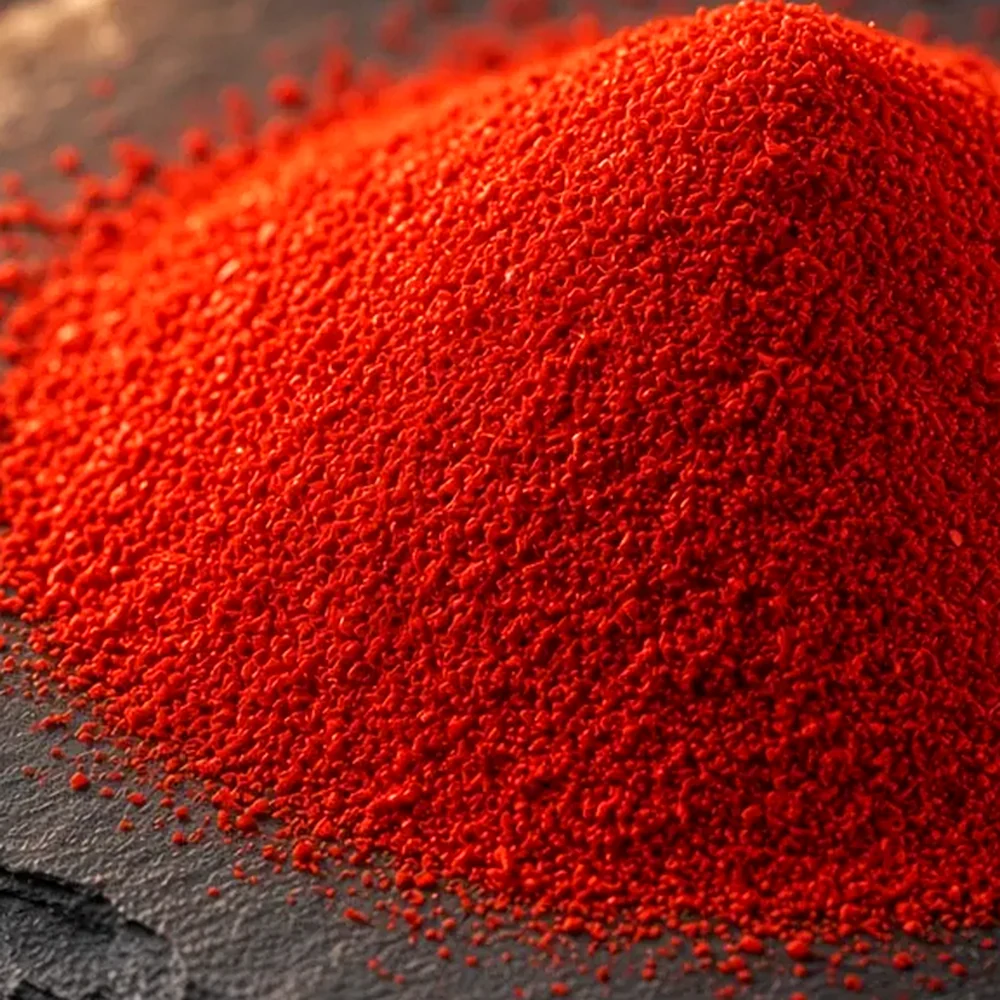
CCB Technology Industrial Snack Electrostatic Dusting Micro-Paprika — Grade P (152 ASTA, 100-140 Mesh)
- Botanical Source: Capsicum annuum L. (Sweet & Mild Pod)
- Color Index: 152 ASTA | Heat Rating: 0-300 SHU
- Particle Size: 100-140 Mesh | Seed Content: 0% Seedless
- Sterilization: Micro-Milled Cryogenic
Bulk Container FCL/LCL · Free 500g Lab Sample & Third-Party COA on Request
Buyer’s guide: Sourcing Paprika Powder from China · All sourcing guides →
1. Botanical Identification, Terroir Provenance & Raw Material Selection
CCB Technology Industrial Snack Electrostatic Dusting Micro-Paprika — Grade P (152 ASTA, 100-140 Mesh) (Catalog SKU: CCB-PAP-116, Master Spec: CCB-PAP-116) is an export-engineered commercial Capsicum ingredient manufactured by CCB Technology Co., Ltd. specifically formulated for Industrial Snack Electrostatic Dusting Micro-Paprika programs. Botanical raw material belongs to rigorously vetted cultivars of Paprika Powder (Capsicum annuum L.) grown across China’s premier semi-arid agricultural belts including Xinjiang’s Tianshan oasis plains, Inner Mongolia’s Hetao alluvial basin, Gansu’s Hexi Corridor, and Shandong’s high-yield horticultural plains. High solar irradiance combined with sharp diurnal temperature swings fosters peak synthesis of lipid-soluble carotenoids—predominantly capsanthin and capsorubin—as well as clean aromatic capsaicinoid profiles without bitter chlorogenic aftertastes.
Prior to entering CCB Technology’s automated milling complex, every raw pod lot undergoes multi-stage field traceability auditing under Good Agricultural Practice (GAP) frameworks. Pods are harvested strictly at full physiological red maturity after moisture has declined naturally on the plant, avoiding premature artificial ripening agents. Incoming dried whole pods are processed through magnetic ferrous separators, gravity destoners to remove soil and mineral silica, calibrated air aspiration to strip leaf fragments and calyx stems, and dual-spectral optical sorting cameras that reject sun-bleached, mold-blemished, or discolored fruits. This disciplined pre-cleaning protocol ensures our Grade P specification delivers uncompromised visual brilliance (152 ASTA), controlled heat (0-300 SHU), and guaranteed pure 0% Seedless botanical integrity.
2. Precision Cold-Air Pin Milling & Particle Granulometry Engineering
Particle size distribution governs every downstream physical behavior of ground Capsicum in automated food manufacturing: powder flowability in volumetric feeders, suspension speed in warm aqueous broths, surface area adhesion onto lipid-coated potato chips and extruded snacks, and visual color distribution inside comminuted meat emulsions. Product CCB-PAP-116 is milled under active cryogenic or chilled-air conditioning to hold product chamber temperatures below 38°C throughout grinding, passing strict vibrating rotary screen calibration to hit the exact target granulometry of 100-140 Mesh.
Conventional high-speed hammer mills generate excessive frictional heat exceeding 70°C, causing Maillard browning that shifts bright vermilion reds toward dull brick brown, caramelizing natural sugars into hygroscopic clumps, and volatilizing delicate fruity aromatics. CCB Technology’s multi-pass roller and pin milling architecture preserves cellular integrity and bright natural oil sheen while tightly constraining the particle distribution curve. Minimal sub-sieve dust fines prevent airborne bridging in pneumatic conveying lines and prevent coughing hazards on manual seasoning stations, while absence of oversized woody bran fragments prevents multi-needle brine injector clogging in cured poultry and ham processing plants.
| Physical & Analytical Parameter | Target Industrial Tolerance (CCB-PAP-116) | Testing Standard / Reference Method |
|---|---|---|
| Color Value Intensity | 152 ASTA | ASTA Method 20.1 Spectrophotometric Assay (460 nm) |
| Pungency / Heat Rating | 0-300 SHU | ASTA Method 21.3 / AOAC 995.03 Reverse-Phase HPLC |
| Particle Size / Granulometry | 100-140 Mesh (≥ 95% pass) | ASTM E11 Calibrated Rotary Sieve Stack |
| Seed & Pericarp Ratio | 0% Seedless | Gravimetric Optical Pod Separation Audit |
| Residual Moisture Content | ≤ 9.5% Max (Target 7.5% – 9.0%) | ASTA 2.0 Toluene Distillation / Vacuum Oven 70°C |
| Water Activity (aw) | ≤ 0.55 at 25°C | ISO 18787 Chilled-Mirror Dew Point Hygrometry |
| Total & Acid-Insoluble Ash | Total ≤ 7.0% | Acid-Insoluble ≤ 0.45% | ISO 928 & ISO 930 Gravimetric Ashing |
3. High-Temperature Short-Time (HTST) Steam Sterilization & Microbial Safety
Microbiological integrity represents a decisive barrier for raw agricultural spices entering ready-to-eat snacks, chilled prepared meals, cold-emulsified dairy dips, and cured sausages that undergo minimal final cooking. Chemical fumigation with ethylene oxide (ETO) or propylene oxide (PPO) is banned across the European Union, Japan, Gulf states, and clean-label North American retail banners due to carcinogenic 2-chloroethanol residue formation, while ionizing gamma irradiation frequently triggers mandatory consumer warning symbols and oxidizes unsaturated lipids.
For this specification (Micro-Milled Cryogenic), CCB Technology operates pressurized stainless-steel saturated steam sterilization chambers under validated High-Temperature Short-Time (HTST) control. By pulling deep vacuum cycles prior to rapid saturated steam injection and immediate flash-vacuum cooling, thermal energy penetrates bacterial spores evenly within seconds without stewing, clumping, or dulling capsanthin pigments. Post-treatment microbiological verification guarantees Total Aerobic Plate Count well within target thresholds, Yeast and Mold strictly below 500 CFU/g, complete absence of Salmonella spp. across 25g composite samples, negative Escherichia coli, and strict suppression of Bacillus cereus and Clostridium perfringens.
4. Carotenoid Colorimetry (ASTA 20.1), Lightfastness & Antioxidant Synergy
The signature visual appeal of CCB Technology Industrial Snack Electrostatic Dusting Micro-Paprika — Grade P (152 ASTA, 100-140 Mesh) relies on its concentrated matrix of esterified keto-carotenoids—primarily capsanthin, capsorubin, beta-carotene, zeaxanthin, and violaxanthin—certified at 152 ASTA. In industrial ingredient sourcing, standardized ASTA color allows formulation chemists to calibrate exact dosage ratios per metric ton of finished product regardless of seasonal agricultural harvest fluctuations. Natural red pigments encapsulated in lipid droplets migrate seamlessly into vegetable oils, emulsified meat fats, butter glazes, and snack frying slurries, imparting uniform warm crimson to deep burgundy visual richness.
Because carotenoid polyene chains contain conjugated double bonds sensitive to photo-oxidation and thermal cleavage, CCB Technology minimizes oxygen headspace exposure from the moment pods leave the mill. Optional natural rosemary extract (carnosic acid) or mixed tocopherol antioxidant buffering can be integrated on contract orders to extend visual shelf stability in clear retail display jars and fried snack seasoning drums. Unlike artificial FD&C Red 40 or Carmoisine dyes, natural Capsicum pigments comply with clean-label ingredient declarations worldwide while simultaneously contributing natural Vitamin E (alpha-tocopherol) activity to finished consumer formulations.
5. Capsaicinoid Chemistry (HPLC SHU Precision) & Controlled Heat Kinetics
Heat perception and pungent balance in CCB-PAP-116 are strictly calibrated to 0-300 SHU via High-Performance Liquid Chromatography (HPLC) quantification of total capsaicinoids—primarily capsaicin (8-methyl-N-vanillyl-6-nonenamide), dihydrocapsaicin, nordihydrocapsaicin, and homocapsaicin. Rather than relying on subjective human organoleptic taste panels prone to olfactory fatigue, HPLC isolates crystalline pungency compounds in parts per million and converts them precisely into standardized Scoville Heat Units (1 ppm total capsaicinoids = 15 SHU), ensuring repeatable lot-to-lot thermal performance for automated commercial lines.
Whether formulated as sweet zero-heat paprika (0-500 SHU) where pungent alkaloids are naturally absent to highlight fruity caramel sweetness, or engineered as precise mild, medium, fiery, or extreme chili grades, balanced ratios between fast-acting capsaicin (front-palate stinging sharpness) and persistent dihydrocapsaicin (warm lingering back-throat heat) allow industrial R&D chefs to pair CCB Technology powders seamlessly with garlic, cumin, black pepper, tomato solids, dairy whey, and fermented soy pastes. Furthermore, finely dispersed surface oil droplets rapidly coat lingual TRPV1 receptors evenly without localized hot spots.
6. Comprehensive Global Regulatory Compliance: Mycotoxins, MRLs & Zero Sudan Dye
Global customs clearance across the European Union, United States, Gulf Cooperation Council, Eurasian Customs Union, and Asia-Pacific demands zero-compromise chemical vigilance. Capsicum fruits grown or dried improperly in humid ambient weather can accumulate nephrotoxic and carcinogenic mycotoxins produced by Aspergillus and Penicillium fungi. Every export container shipped by CCB Technology undergoes third-party accredited ISO/IEC 17025 analytical verification against the strictest international destination regulations:
| Contaminant / Safety Parameter | CCB Technology Guaranteed Maximum Limit | Global Regulatory Alignment |
|---|---|---|
| Aflatoxin B1 / Total Aflatoxins (B1+B2+G1+G2) | ≤ 5.0 ppb (B1) / ≤ 10.0 ppb (Total) | EU Reg. (EU) 2023/915 & US FDA CPG 555.400 |
| Ochratoxin A (OTA) | ≤ 15.0 ppb Max | EU Spice Ceiling & GCC SASO Standards |
| Illegal Azo & Lipophilic Dyes (Sudan I-IV, Para Red, Rhodamine B) | Not Detected (< 10 ppb via LC-MS/MS) | EU Rapid Alert System (RASFF) Zero-Tolerance |
| Pesticide Multi-Residue Screen (500+ Analytes) | 100% Compliant with Destination MRLs | EC No. 396/2005, US EPA, Japan Positive List |
| Heavy Metals (Lead / Cadmium / Arsenic / Mercury) | Pb ≤ 1.0 ppm | Cd ≤ 0.2 ppm | As ≤ 0.5 ppm | Hg ≤ 0.05 ppm | Codex Alimentarius & Prop 65 Screening |
| Ethylene Oxide & 2-Chloroethanol (ETO Sum) | Not Detected (< 0.02 ppm) | EU Regulation EC 396/2005 Clean-Label Policy |
Additionally, all processing zones within CCB Technology maintain strict allergen segregation protocols guaranteeing zero cross-contamination with the Big Nine/Fourteen allergens (peanuts, tree nuts, milk, eggs, soy, wheat/gluten, fish, crustacean shellfish, sesame, mustard, celery, lupin, sulfites). Facilities hold active BRCGS Food Safety, FSSC 22000, ISO 22000, Halal (HFC / MUI compatible), and Kosher Parve certifications alongside verified Non-GMO Project status.
7. High-Barrier Packaging Architecture, Ocean Freight Stability & Storage
Improper bulk packaging destroys spice color and free-flow mechanics during transoceanic maritime transit through tropical equatorial shipping lanes, where interior dry container temperatures routinely reach 55°C and coastal port humidity spikes above 85% RH. To preserve bright capsanthin luster and prevent caking across 24 months of ambient warehouse shelf life, CCB Technology packages CCB-PAP-116 using multi-layer high-barrier composite engineering tailored to container routing:
- Primary Moisture & Oxygen Barrier: 25 kg multi-wall bleached or unbleached kraft paper sacks reinforced with heavy-duty inner food-grade blue LDPE liners (≥ 80 μm) or EVOH/PE co-extruded high-barrier films heat-sealed immediately post-chilling. Optional vacuum-packed or nitrogen-flushed 10 kg × 2 metalized aluminum foil cartons for premium high-ASTA paprika lots.
- Container Loading & Palletization: Unitized on ISPM-15 heat-treated fumigation-free export pallets, wrapped in UV-blocking black or clear high-tensile stretch hooding, and fortified with food-grade calcium chloride container desiccant strips to capture condensation (“container rain”). A standard 20ft FCL container accommodates 15.0 to 16.5 metric tons; a 40ft High-Cube FCL accommodates 25.0 to 27.0 metric tons depending on mesh bulk density.
- Recommended Destination Warehousing: Store in dry, cool, dark warehouses at 10°C – 22°C and relative humidity below 60% away from direct sunlight and strong odoriferous chemicals. Tightly re-seal open partially used bags immediately after production batch weighing.
8. Industrial Food Processing Applications & Formulation Integration Guidelines
Engineered specifically for Industrial Snack Electrostatic Dusting Micro-Paprika, CCB-PAP-116 integrates cleanly across high-speed commercial production workflows:
Snack Food Electrostatic Tumbler Dusting & Oil Slurry Application: Ultra-uniform 100-140 Mesh screening maximizes surface adherence on fried potato chips, baked tortilla triangles, extruded corn curls, and seasoned nuts. When dispersed in palm olein, high-oleic sunflower oil, or fractionated coconut oil at 6% – 10% loading, fine powder suspends smoothly without clogging spray nozzles and creates uniform rich crimson sheen across the snack surface without rubbing off inside metallized OPP retail pouches.
Processed Meats, Fermented Sausages & Poultry Curing: Extremely low microbial spore count (Micro-Milled Cryogenic) and nitrite compatibility ensure stable lactic acid starter culture fermentation in dry salamis, chorizo, frankfurters, and mortadella without triggering gas blowing or premature grey-brown discoloration. Typical incorporation rate ranges from 0.8% to 2.5% of meat block weight. For brine injection, super-refined low-ash particles pass multi-needle manifolds cleanly without pressure drops.
Instant Noodle Soup Sachets, Liquid Sauces & QSR Marinades: Rapid wetting kinetics ensure instantaneous color release and even capsaicinoid suspension in boiling broth packets, barbecue glazes, burger sauces, and commercial marinades. Does not require synthetic gums solely to mask raw sedimentation when homogenized at target particle thresholds.
9. Commercial Export Terms, Quality Documentation & Factory Direct Inquiry
CCB Technology supports multinational food manufacturers, regional seasoning blenders, meat processors, and private-label wholesalers with flexible contract volume pricing, year-round harvest inventory allocation, and custom color/heat/mesh standardization. Every commercial shipment is accompanied by a full export compliance dossier: Lot-Specific Certificate of Analysis (COA), Certificate of Origin (COO / Form E / EUR.1), Phytosanitary Certificate, Halal/Kosher Certificates as specified, Commercial Invoice, Packing List, and Clean Bill of Lading.
CCB Technology — Global B2B Export Desk (CCB-PAP-116)
Verified Official Manufacturer
CCB-PAP-116 for same-day technical desk response.More from this supplier · Sweet Paprika
View all → CCB Technology European Standard High-Color Sweet Paprika — Grade A (142 ASTA, 60-80 Mesh)
 CCB Technology European Standard High-Color Sweet Paprika — Grade F (152 ASTA, 60-80 Mesh)
 CCB Technology European Standard High-Color Sweet Paprika — Grade E (150 ASTA, 60-80 Mesh)
 CCB Technology European Standard High-Color Sweet Paprika — Grade C (146 ASTA, 60-80 Mesh)
 CCB Technology European Standard High-Color Sweet Paprika — Grade G (154 ASTA, 60-80 Mesh)
 CCB Technology European Standard High-Color Sweet Paprika — Grade B (144 ASTA, 60-80 Mesh)
 CCB Technology European Standard High-Color Sweet Paprika — Grade D (148 ASTA, 60-80 Mesh)
 CCB Technology European Standard High-Color Sweet Paprika — Grade J (160 ASTA, 60-80 Mesh)